Owning a home comes with the opportunity to make changes that improve comfort, functionality, and living space. Whether you want to renovate an existing room or expand your property, choosing the right financing option is an important part of planning the work.
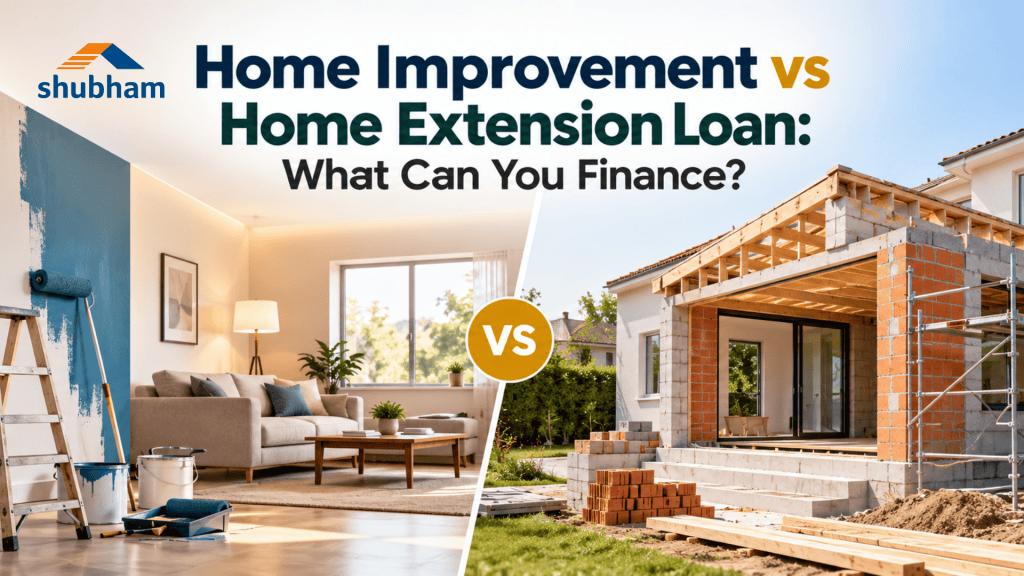
A home improvement loan and a home extension loan are two financing options available to homeowners. While both help fund changes to an existing property, they serve different purposes. A home improvement loan focuses on repairs and renovations, whereas a home extension loan helps finance construction that adds more space.
Housing finance providers such as Shubham Housing Finance offer financing solutions for different income groups, including salaried individuals, self-employed professionals, and people earning through cash or informal income sources.
What Is a Home Extension Loan?
A home extension loan is designed for homeowners who wish to increase the usable space within their existing residential property. Instead of purchasing another house, they can consider expanding their current home to accommodate changing family needs.
This type of loan can be used for several construction activities, including:
- Building an additional bedroom, bathroom, or other room.
- Constructing another floor on an existing house.
- Increasing the size of the kitchen or living area.
- Developing a balcony, porch, or additional storage space.
Since extension projects involve construction, lenders generally assess the proposed work before approving financing.
The sanctioned amount may be released in stages based on construction progress. Lenders may also request approved building plans, property ownership records, and other relevant documents before disbursing funds.
What Is a Home Improvement Loan?
A home improvement loan provides financial assistance to homeowners planning to repair, renovate, or modernise their existing property without expanding its overall structure.
Over time, houses may require maintenance, structural repairs, or interior upgrades. A home improvement loan can help homeowners manage eligible renovation expenses without relying entirely on their savings.
Common purposes include:
- Repainting interior and exterior walls.
- Replacing outdated flooring or damaged tiles.
- Upgrading kitchens and bathrooms.
- Repairing electrical connections and plumbing systems.
- Fixing damaged doors, windows, ceilings, or walls.
Unlike a home extension loan, this financing option generally focuses on improving existing spaces rather than constructing additional rooms or floors.
Depending on the lender’s policy and the renovation requirements, funds may be released together or in stages. Applicants may need to submit contractor quotations or estimated renovation costs.
What Can You Finance?
Understanding the expenses covered by each loan can help homeowners select financing that matches their project requirements.
Expenses Covered Under a Home Extension Loan
A home extension loan may cover costs associated with increasing the size of an existing property, such as:
- Construction materials required for additional spaces.
- Labour charges for building and construction activities.
- Professional fees for architects or engineers.
- Structural construction that creates additional living space.
Expenses Covered Under a Home Improvement Loan
A home improvement loan may help finance renovation and maintenance expenses, including:
- Wall painting, flooring replacement, and waterproofing.
- Renovation of existing kitchens and bathrooms.
- Plumbing and electrical system repairs.
- Other eligible maintenance and home improvement activities.
The actual expenses covered depend on the lender’s policies, property requirements, and approved loan purpose.
Who Can Apply?
Eligibility for a home improvement or home extension loan depends on several factors, including property ownership, applicant income, age, and repayment capacity.
Applicants generally need to meet requirements such as:
- Owning the residential property for which financing is required.
- Being an Indian resident.
- Being at least 21 years old, subject to the lender’s age criteria and age at loan maturity.
- Having a regular income source, whether through employment, business, cash earnings, or other informal income.
Shubham Housing Finance also supports applicants searching for a home loan without salary slip, home loan without ITR, or home loan for informal income.
These options can be particularly relevant for individuals who may not have conventional salary documentation but have an identifiable income source and the ability to repay the loan.
However, loan approval remains subject to the lender’s eligibility assessment, documentation requirements, and credit evaluation.
Loan Tenure
The repayment period for a home improvement or home extension loan can vary depending on the sanctioned loan amount, applicant eligibility, and financing terms.
Home extension loans may offer comparatively longer repayment periods because they can involve larger construction expenses. Depending on the lender and product, some home-related loans may provide tenures extending up to 20–30 years.
Home improvement loans, on the other hand, may have shorter repayment periods based on the renovation cost and loan structure.
Choosing a longer repayment tenure can reduce the monthly Equated Monthly Instalment (EMI), making payments more manageable.
However, borrowers should also consider that a longer tenure generally increases the total interest paid throughout the loan period.
Before applying, homeowners should evaluate their monthly income, regular expenses, and repayment capacity to select a suitable tenure.
Documents Required
Lenders typically require documents to verify the applicant’s identity, property ownership, income, and proposed use of loan funds.
Common documentation may include:
- Identity proof: Aadhaar, PAN, or other accepted identification documents.
- Address proof: Valid documents confirming the applicant’s residential address.
- Property documents: Ownership records and other property-related papers.
- Bank statements: Financial records requested for income and repayment assessment.
- Project-related documents: Contractor quotations, renovation estimates, or approved construction plans, depending on the type of loan.
Documentation requirements may differ for salaried, self-employed, and informal-income applicants.
The lender may also request additional information depending on the property’s condition, proposed construction work, and individual applicant profile.
Main Benefits
Both financing options help homeowners make necessary changes to their properties without paying the entire project cost upfront.
Some potential benefits include:
- Improved living conditions: Renovation and extension projects can make existing spaces more comfortable and functional.
- Potential property value improvement: Well-planned upgrades or additional living space may improve a property’s market appeal and value.
- Competitive financing options: Secured housing-related loans may offer lower interest rates than some unsecured personal loans, depending on the lender and applicant profile.
- Flexible repayment choices: Available tenure options can help homeowners plan repayments according to their financial capacity.
- Construction-linked disbursement: Extension loans may release funds in stages as approved construction progresses.
- Support for different home requirements: Eligible expenses can include repairs, renovations, upgrades, and additional construction.
The specific features and benefits depend on the loan product and the lender’s terms.
Why Choose Shubham Housing Finance?
Finding suitable financing can be challenging for applicants whose income does not follow a conventional monthly salary structure.
Shubham Housing Finance is a home loan company that serves salaried individuals, self-employed borrowers, and applicants earning through cash or informal income sources.
Its financing solutions are designed to support different housing requirements while considering the applicant’s income profile and repayment capacity.
Shubham Housing Finance offers:
- Affordable home loan options for eligible housing requirements.
- Financing support for self-employed individuals and cash-income applicants.
- A straightforward application process with clearly explained steps.
- Repayment options based on eligibility and assessed income.
Applicants can explore the available options to understand which financing solution may suit their property requirements and financial circumstances.
Ready to Improve or Extend Your House?
Whether your goal is to modernize your existing home or create more living space, selecting the appropriate loan can make financing the project easier to plan.
A home improvement loan can support eligible repairs and upgrades, while a home extension loan can help finance construction that expands your property.
Shubham Housing Finance provides affordable home loan solutions for different housing needs. If you are planning a home renovation or extension, connect with Shubham Housing Finance to explore your options and understand the application process with a home loan company.


Leave a Reply